


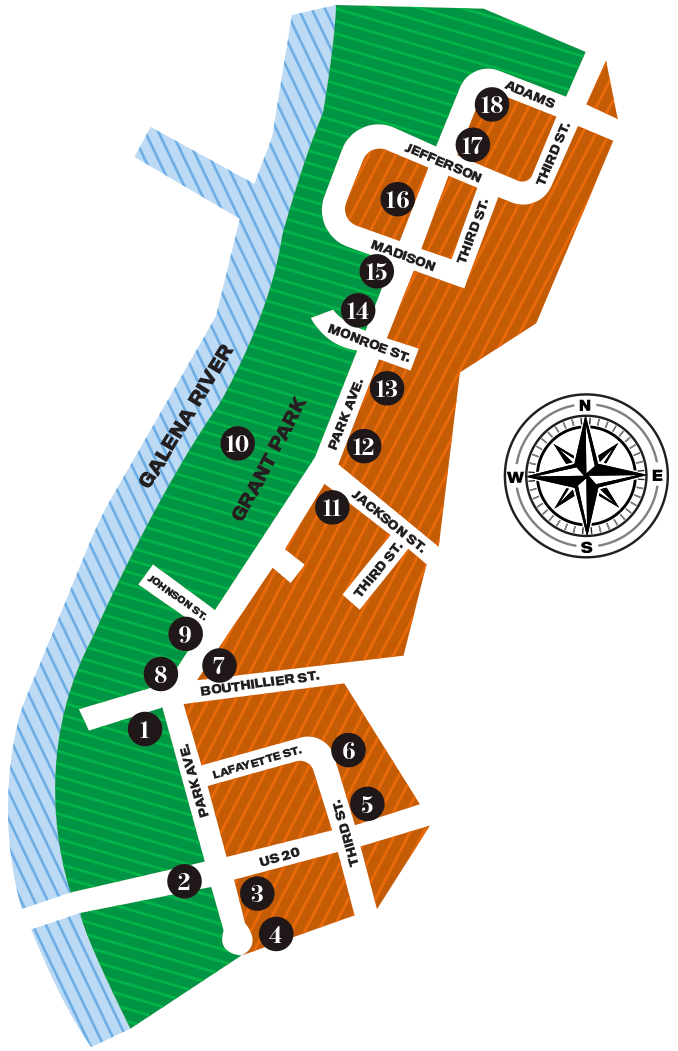
Park Avenue
River Views & Scenic Parkways
- Old Illinois Central RR Depot (Park Avenue & Bouthillier Street)
- U.S. Highway 20 Bridge
- Darius Hunkins House (1004 Park Avenue)
- Belvedere Mansion (1008 Park Avenue)
- Washburne House (908 Third Street)
- Aldrich House (900 Third Street)
- Water Works (Park Avenue & Bouthillier Street)
- East Galena Town Hall (725 Park Avenue)
- Strohmeyer Bros. Boot and Shoe Factory (703 Park Avenue)
- Grant Park
- Capt. Orrin Smith House (600 Park Avenue)
- Hoge House (512 Park Avenue)
- Horton House (506 Park Avenue)
- Telford House (407 Park Avenue)
- Union House Hotel (401 Park Avenue)
- Rowley House (305 Park Avenue)
- Bias Sampson House (208 Park Avenue)
- William Ridd House (200 Park Avenue)
×
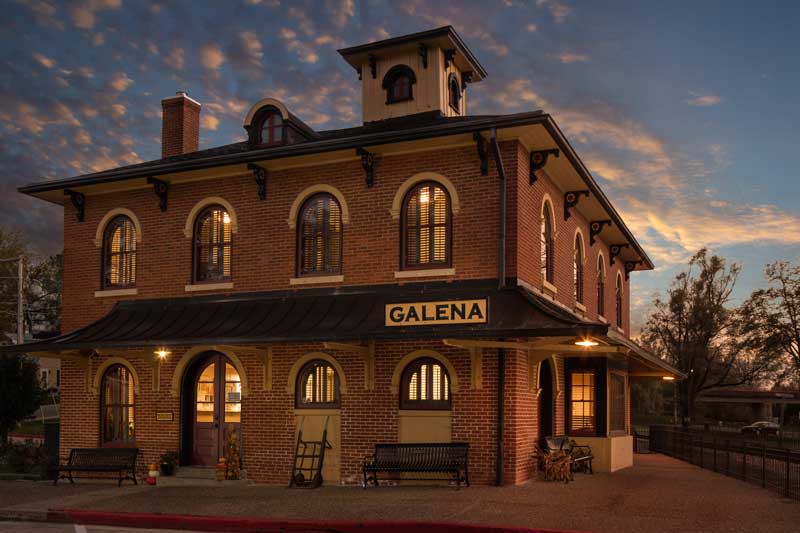
Old Illinois Central RR Depot
(Park Avenue & Bouthillier Street)
Italianate – The Original 1857 passenger depot was built at a cost of $8,000. The railroad, which benefited Chicago financial interests, hastened the demise of Galena's river trade after its arrival in 1854. Currently, the Old Train Depot serves as the area's Visitor Information Center.
×
U.S. Highway 20 Bridge
With 85% of Galena listed in the National Register of Historic Places, state and federal projects must not adversely impact the district. The bridge, built in the 1980s, was required to blend in with the district. To comply, the piers were faced with limestone, period railings/lights were added, and concrete was dyed a buff color to match the native limestone, the latter costing an additional $27,000.
×
Darius Hunkins House
(1004 Park Avenue)
Greek Revival – This beautiful home started out with one story in 1846 and grew up and out as the wealth of railroad and bridge building magnate Hunkins increased. He built the first two iron bridges in Galena in 1847. They were drawbridges to let steamboats pass. Volunteers had to run and begin turning cranks to open the bridge when a boat whistle was heard.
×
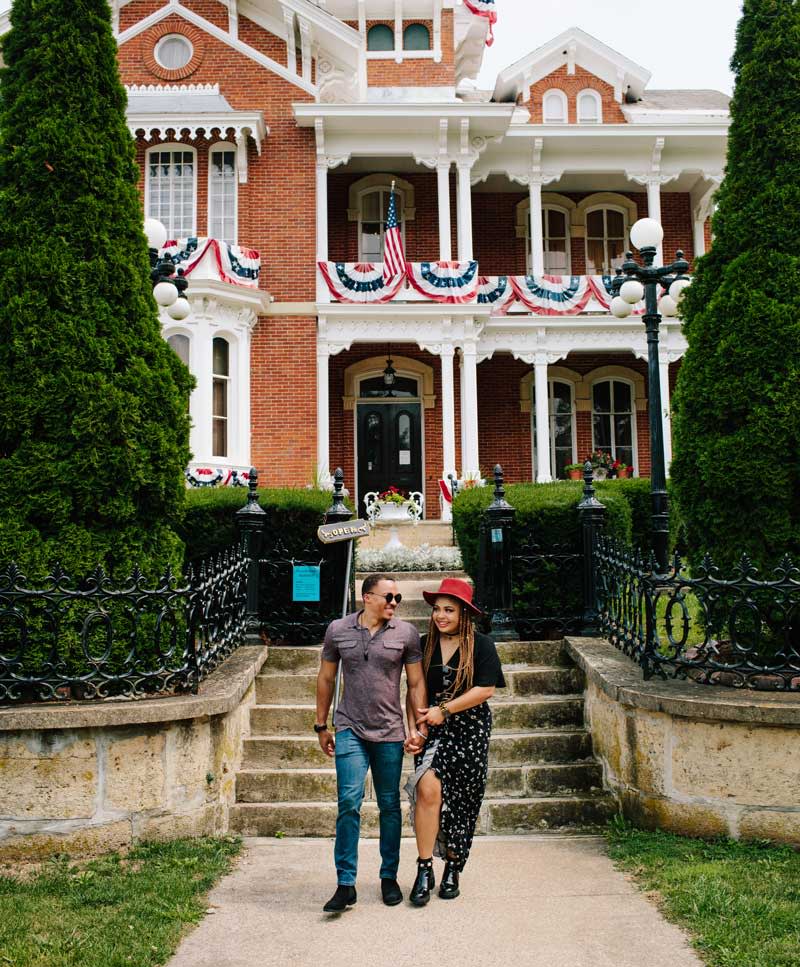
Belvedere Mansion
(1008 Park Avenue)
Italianate - This 1857 mansion with the massive cupola (also called belvedere) was built by J. Russell Jones, a prominent businessman and part-owner of the Galena and Minnesota Packet Steamboat line. A friend of Lincoln and Grant, he was appointed Minister to Belgium after the Civil War. Like many of Galena's wealthy business leaders, he moved to Chicago with the town's decline. The home is open seasonally for tours.
×
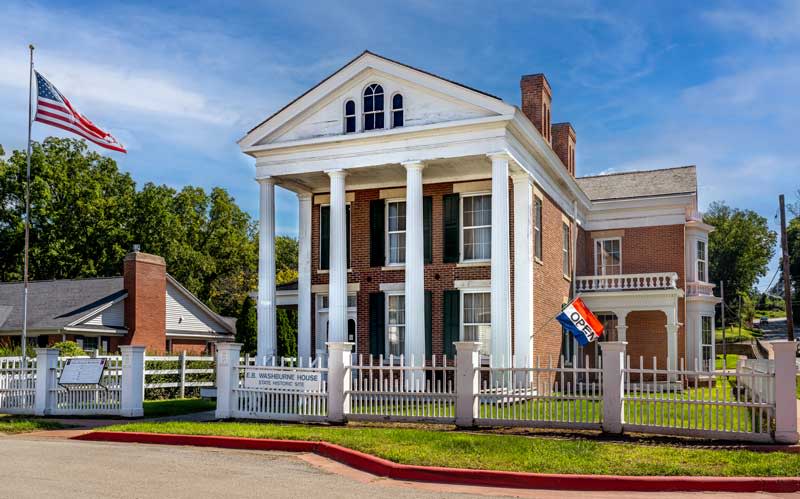
Washburne House
(908 Third Street)
Greek Revival - This home started as a modest one-story house in 1844. Elihu Washburne arrived from Maine in 1840 to practice law. He was elected to the U.S. Congress in 1852 and joined the new Republican Party in 1856. He did more to further Grant's political career than any other. Grant learned of his election to the presidency in 1868 while in the Washburne library. Washburne briefly served as Secretary of State and later as Minister to France during Grant's Presidency.
×
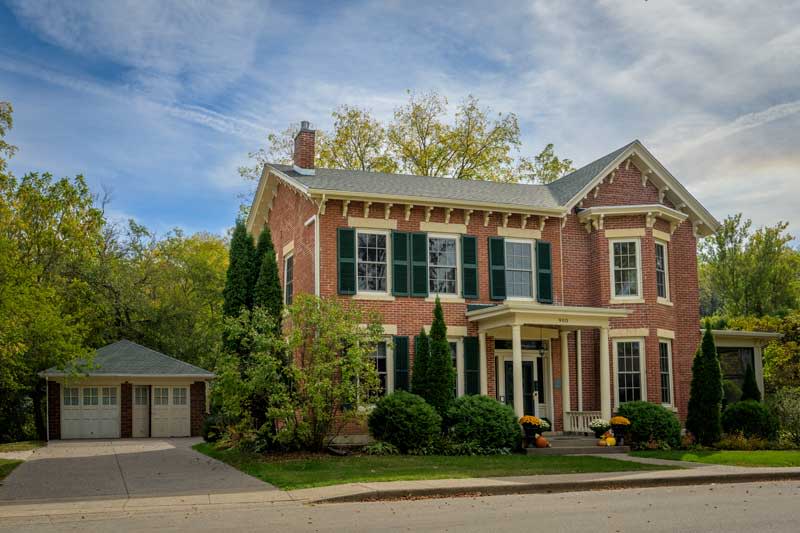
Aldrich House
(900 Third Street)
Greek Revival (original section) – This first part was built by stage agent Cyrus Aldrich in 1846. Prominent businessman J. Russell Jones added a large addition in 1853. Lawyer Robert McClellan purchased the property in 1858 and served in the State House and Senate. Local tradition holds that U.S. Grant trained Galena's first Civil War volunteers on the lawn between here and the Washburne House.
×
Water Works
(Park Avenue & Bouthillier Street)
Queen Anne – The building was erected in 1886 as the city's first water works facility. Note the treatment of the windows, doors, and chimney. A good example of Galena's adaptive reuse of historic buildings.
×
East Galena Town Hall
(725 Park Avenue)
Mixed Style - Built in 1871, this building still serves as the official voting and meeting place for residents of East Galena Township.
×
Strohmeyer Bros. Boot and Shoe Factory
(703 Park Avenue)
Commercial - Built in 1886, this factory produced thousands of boots and shoes before being turned into three apartments.
×
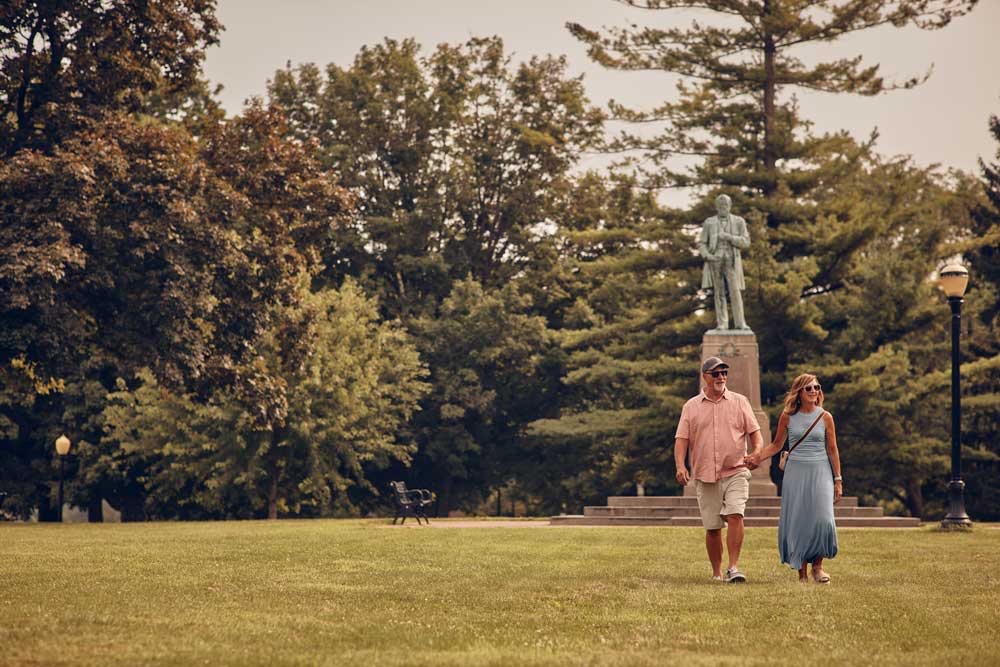
Grant Park
Established in 1891 as a place for the bronze statue of U.S. Grant, who died in 1885. The gazebo, originally called the bandstand, was completed in 1901. The park has been the scene of a multitude of celebrations, orations, picnics, and weddings. Note the cannons, particularly the Civil War Blakely. It is a rare rifled piece, part of the Confederate battery which fired on Fort Sumter in 1861, signaling the beginning of the Civil War.
×
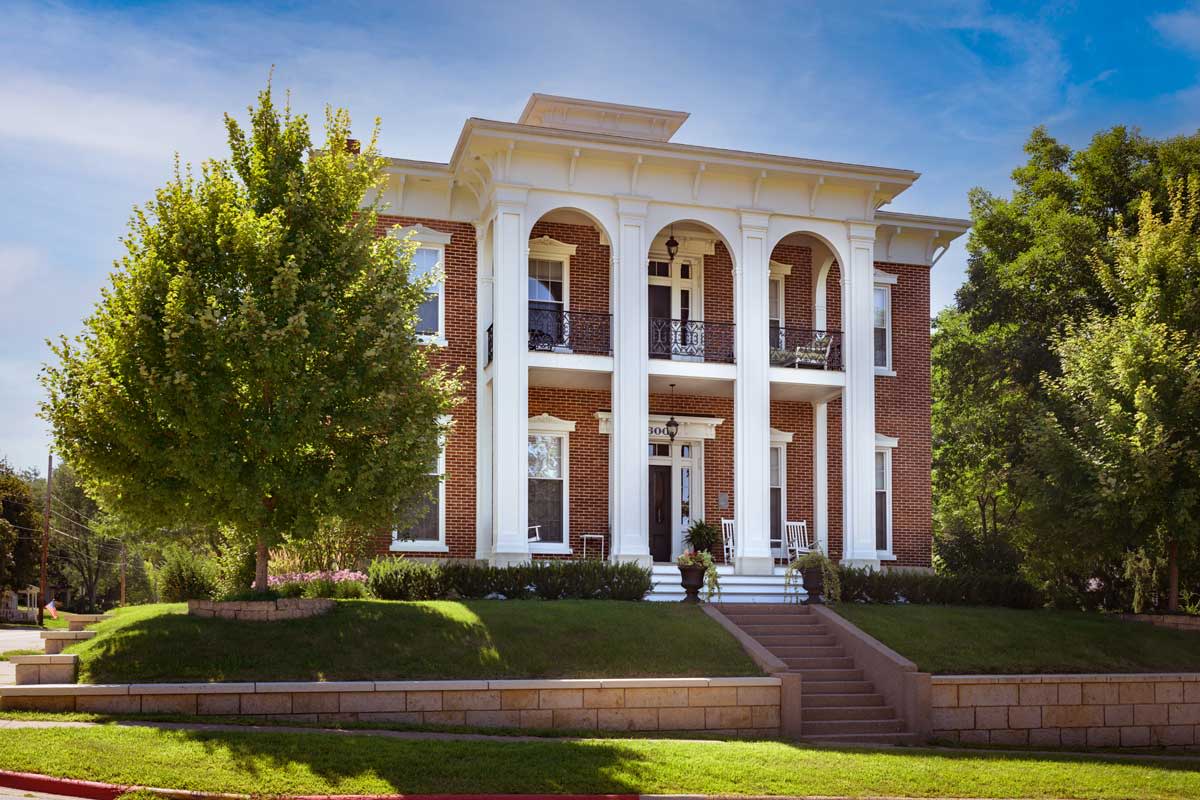
Capt. Orrin Smith House
(600 Park Avenue)
Italianate, although full two-story columns reflective of Greek Revival – This home was built in 1852. Smith was typical of Galena's business community with money invested in wholesale groceries, land, brickyards, and riverboats. As a steamboat captain, he refused to operate his boats on the Sabbath.
×
Hoge House
(512 Park Avenue)
Greek Revival - Lawyer and politician Joseph Hoge had this perfect example built in 1842. The 4-unit apartment building to the right, however, was built in 1985 and generated considerable controversy because it was a new building in this part of the historic district. The City determined that since the street had over 150 years of successive architectural styles, they wouldn't stop the process. They did, however, require the owner to build in a modern but sympathetic manner by using similar setback, scale, massing, etc. Some historic districts would not have permitted a new structure.
×
Horton House
(506 Park Avenue)
Gothic Revival – This home was built in 1883 by lumber merchant and builder Otis Horton. Its steeply pitched roof with street-facing gable and tall narrow windows create a gothic revival effect. When ornamented with gingerbread and much porch detail, some would call this type of house "carpenter gothic."
×
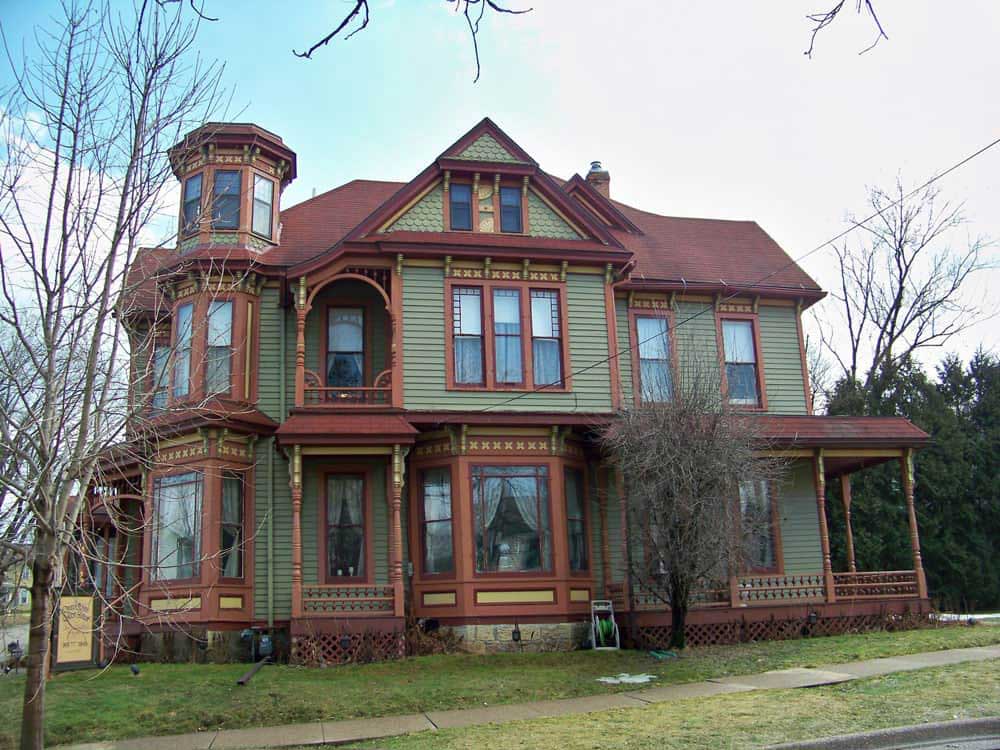
Telford House
(407 Park Avenue)
Second Empire – This was built in 1879 by prolific architect and house builder Harry Telford. Note the "mansard" roof, which comes down over the upper floor. A style popular during the administration of U.S. Grant, but which today seems more associated with haunted houses in the movies, partly because of its foreboding roof and partly because so many were left to deteriorate due to the expense of maintenance.
×
Union House Hotel
(401 Park Avenue)
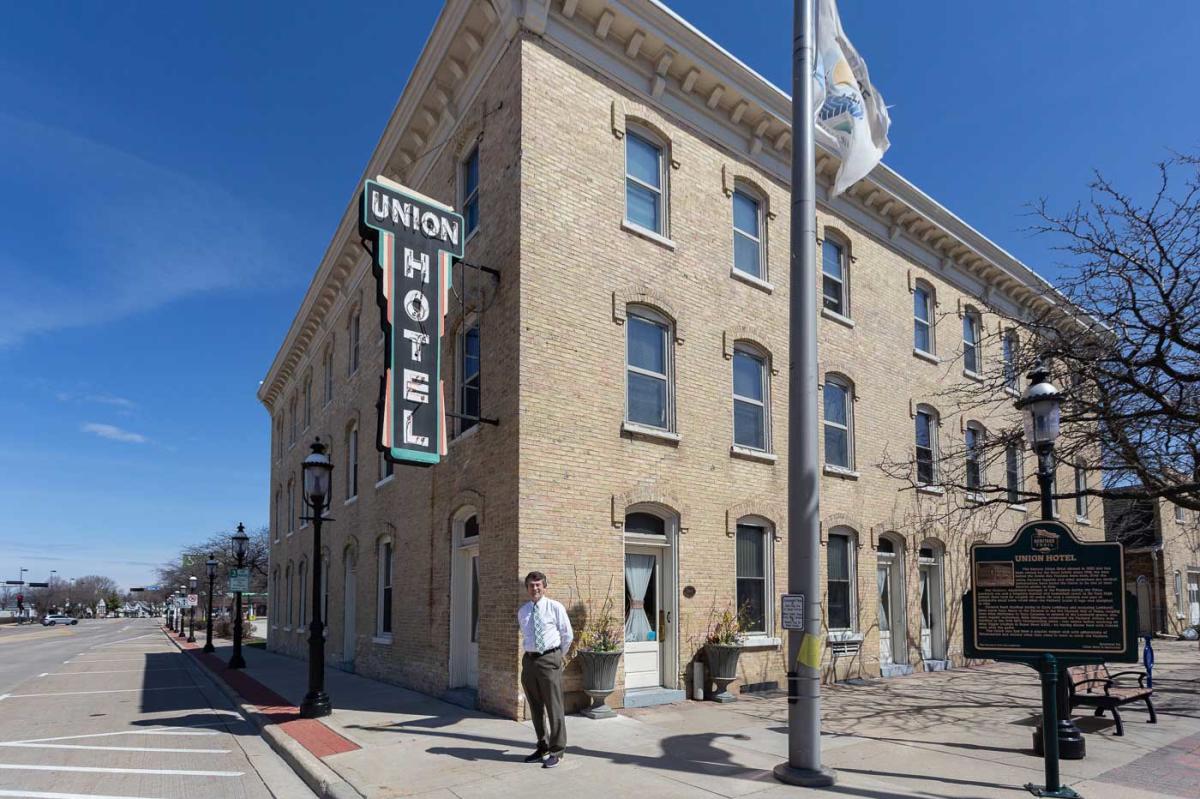
Vernacular with some Colonial Revival remodeling - This house was built in 1839 of logs and served as a hotel for riverboat travelers and later, in 1854, for railroad travelers. In 1855, a room could be had for only one dollar and a meal for 35 cents. It actually faces the river. Park Avenue was only a back alley at the time. Two subsequent remodelings have added a back (now front) porch and shingle siding.
×
Rowley House
(305 Park Avenue)
Vernacular with some Italianate detailing – This home was built in 1869 by one of Galena's nine Civil War generals, William R. Rowley. He rose from schoolteacher to county assessor, collector, clerk, and sheriff. He presided over the only hanging in Jo Daviess County in 1855. John Taylor was going to be hung next to the Court House, but a public outcry had the gallows moved to the county's Poor Farm. Good thing, because several thousand people showed up to witness the affair.
×
Bias Sampson House
(208 Park Avenue)
Queen Anne – This is a beautiful example of this style and was built in 1893. Note the elegant turret and many different types of windows, siding, roofs, and trim. The large porch or veranda is also typical, as is the large yard. It was built for naval commander Sampson by local builder J.B. Ginn.
×
William Ridd House
(200 Park Avenue)
Queen Anne - Built in 1891 for grocer Ridd, this house shows the characteristic tower, asymmetry, and elaborate woodwork. One critic of the Queen Anne style suggested that so many shapes and designs had been crammed into the style that it looked ready to explode.
Downtown Area
Center Of Commerce and Exchange
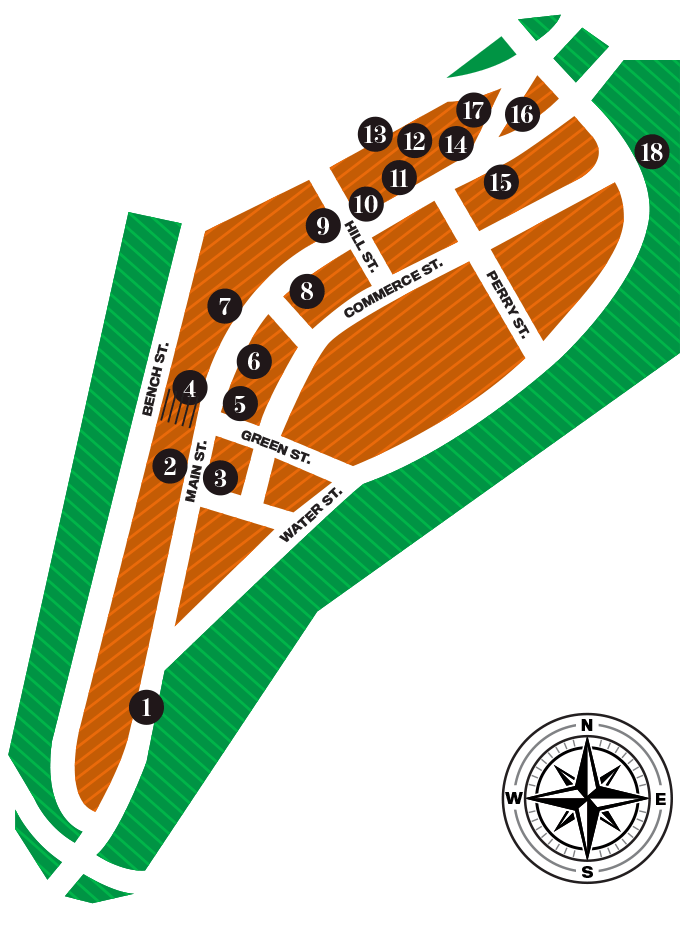
- Galena River Levee & Floodgates
- Corwith Building (319 S. Main Street)
- Davis Block (304-310 S. Main Street)
- Old High School Steps
- DeSoto House Hotel (230 S. Main Street)
- DeSoto House Parking Garage
- Schmohl Building (St. Louis Building) (201 S. Main Street)
- Coatsworth Building (126 S. Main Street)
- Newhall Drug Store (101-103 S. Main Street)
- Hempstead Store (100 N. Main Street)
- Brush Building (120 N. Main Street)
- Perry Street
- Old Stockage (208 Perry Street)
- Meusel Cigar Factory (208-210 N. Main Street)
- Flat Iron or Diagonal Building (222 N. Main Street)
- John Dowling Building (213 N. Main Street)
- John Dowling House (216 Diagonal Street)
- Old Blacksmith Shop (Corner of Commerce and Franklin Streets)
×
Galena River Levee & Floodgates
Built by the Army Corps of Engineers 1948-51, this large earthen levee with gates protects the downtown business district from periodic flooding, the worst of which was in 1937. This flood left up to five feet of water along Main Street.
Note: Visitors often ask how often the little green floodgates are used. Normally they might be closed only once every few years, usually when the ice goes out of the river in the spring. But in recent years they've been used several times for high water on the Mississippi River, which quickly backs up to Galena.
×
Corwith Building
(319 S. Main Street)
Constructed in 1853 with a major facelift in 1873. This was the home of Nathan Corwith's Bank of Galena. The Corwiths were prominent businessmen from New York. Nathan Corwith left Galena in 1874 and moved to Chicago. He died in 1888, worth over $6 million.
×
Davis Block
(304-310 S. Main Street)
This was the first all brick block building in Galena. It consisted of five stores and was constructed in 1846.
×
Old High School Steps
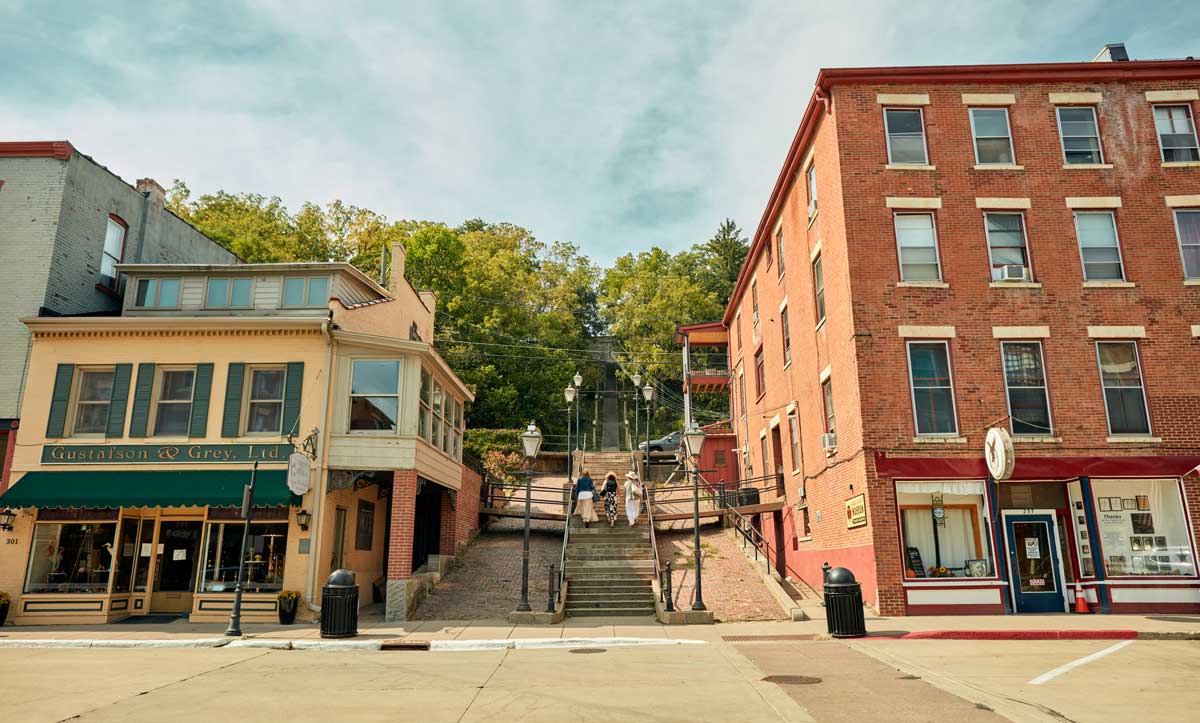
Located across from the DeSoto House, the stairway has been here since the 1850s. Wooden steps were replaced by concrete in 1919 and again in 1996. In addition to benefiting hilltop residents, the steps served hundreds of school children who used them morning, noon, and afternoon. They were walking to the large building on the hill with a square clock tower. This is the Old High School, which was built in 1905 and converted in the 1980s to condominiums.
×
DeSoto House Hotel
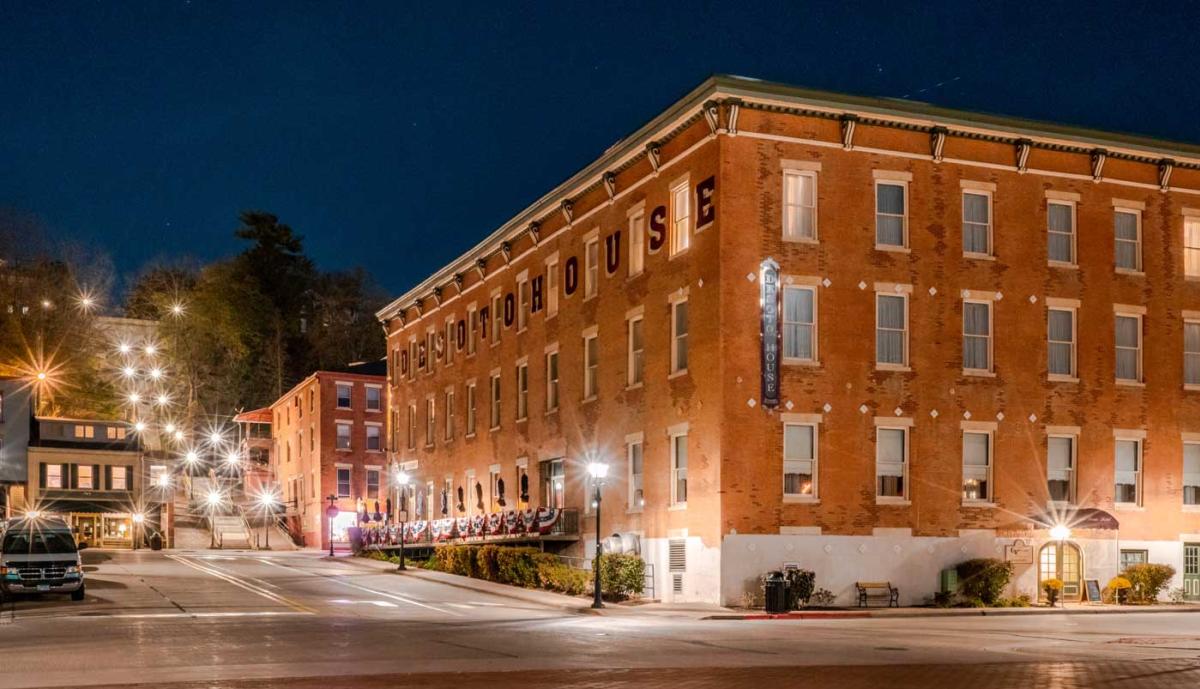
230 S. Main Street
Opened in 1855, the DeSoto is the oldest operating hotel in Illinois. It was named for the discoverer of the Mississippi, Hernando DeSoto. Investors included Jesse Grant, father of Ulysses. Both Lincoln and Douglas spoke from the balcony, although on separate occasions. Grant's presidential campaign headquarters were here in 1868. The original structure had five floors and 225 rooms, but lack of business, foundation settling, and fire insurance problems led to the top two floors being removed in 1880. It was completely renovated in 1985-86.
×
DeSoto House Parking Garage
Original facades of Main Street buildings were kept for historic appearance. The hotel project could not have proceeded without this solution to off street parking. The garage site was originally a livery stable for the famous Frink and Walker Stage Line out of Chicago during the 1840s and early 1850s.
×
Schmohl Building
201 S. Main Street
John and Lena Schmohl emigrated from Germany in the 1850s and opened a millinery store at this site. In 1886, Lena, having lost her husband, built this building and installed Galena's first hydraulic elevator. Her apartment was in back along Bench Street. She was a respected business leader long before most women had the opportunity.
×
Coatsworth Building
126 S. Main Street
The structure was built by Joseph Coatsworth and Daniel Barrows in 1856-57. It utilized premium Milwaukee Cream City bricks, cast iron pillars, lintels, and sills. JR. Grant promptly leased the 120 S. Main section for his leather goods store. It was here that Ulysses came to work in 1860. Major restoration occurred in the late 1970s, and the building now houses apartments for seniors.
×
Newhall Drug Store
(101-103 S. Main Street)
This building was built in 1843 by Galena's foremost physician/pharmacist Horatio Newhall, a Yale graduate, who also published the "Miners Journal," Galena's first newspaper in 1828. But his most notable work was in treating cholera victims during the dreaded 1832 and 1848 outbreaks. His observations on the disease and its spread are considered some of the best of the period. Note the small attic windows in the frieze, typical of 1840s Greek Revival structures.
×
Hempstead Store
(100 N. Main Street)
This Greek Revival-style structure was built in 1846. Charles Hempstead was the first mayor of Galena and was elected in 1841. Prior to this, the town was governed by a board of trustees and a president. "City" status was given by act of the legislature; Jo Daviess County's other "city" is East Dubuque; all other towns in the county are villages. The second floor also housed the law office of John A. Rawlins, another of Galena's nine Civil War generals, who became Grant's Chief of Staff.
×
Brush Building
(120 N. Main Street)
Circa 1837, this was the first large store to be constructed of brick in the downtown. Note the federal style stepped gables, double-chimney, and prominent roof dormers.
×
Perry Street
This is also known as the "cobblestone" street, although the stone was laid down as a deterrent to erosion, not as a paving stone. Maintaining control of horses and wagons on steep hills was a constant danger in early Galena. Some say it still is. But now with cars.
×
Old Stockage
(208 Perry Street)
Trader Amos Farrar's house became part of Galena's stockade during the 1832 Black Hawk War. A refuge for women and children, the upright timbers placed along the sill shows French "post and sill" influence. It was restored to 1890s appearance.
×
Meusel Cigar Factory
(208-210 N. Main Street)
This 1888 Italianate commercial building housed one of Galena's many 19th-century cigar manufactories. It was home to the Standard Cigar Factory. Tobacco was also a cash crop for some county farmers, particularly in the Stockton area, up until the 1890s.
×
John Dowling Building
(213 N. Main Street)
This building was constructed in 1837 of native limestone. The southern half was purchased by the County and used as the courthouse from 1838 until the present courthouse was completed in 1844. The original building had a gable roof. Interestingly, the street level here was originally much lower; the main entrance in 1838 entered what is now the basement.
×
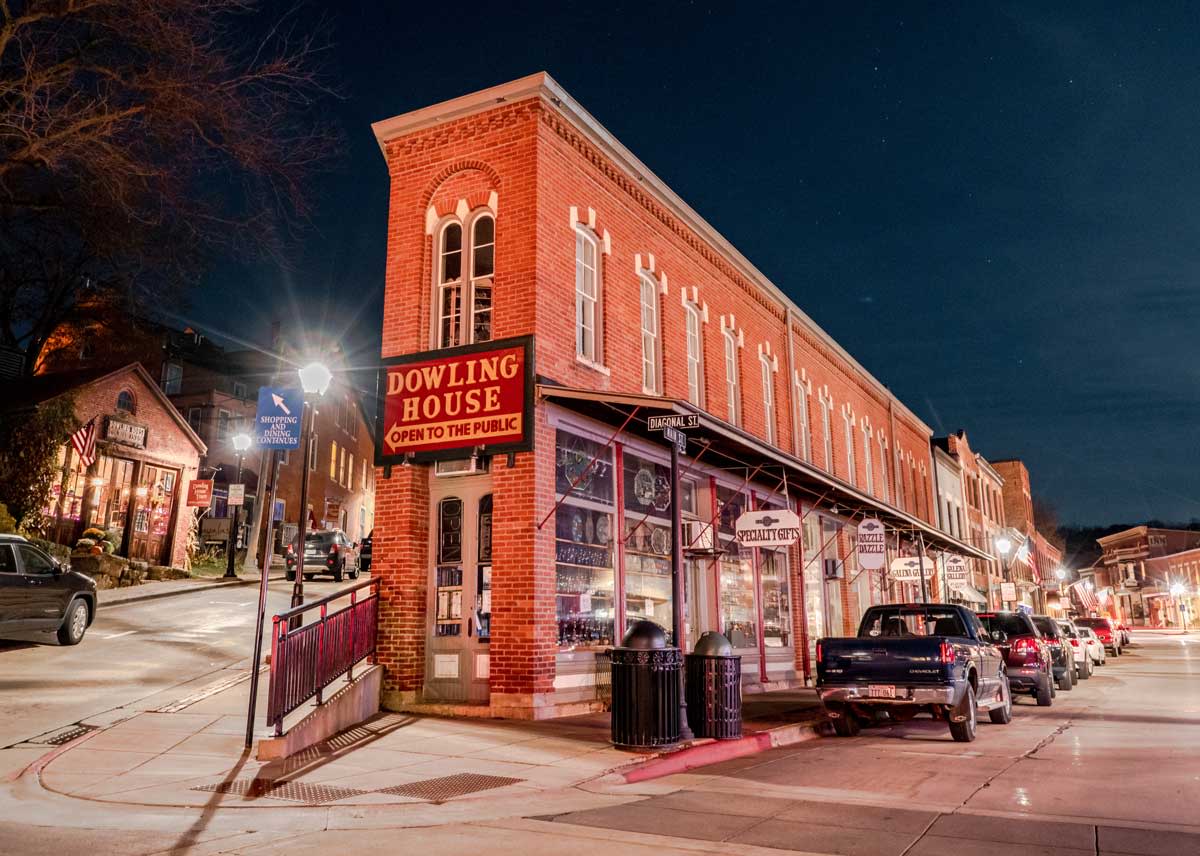
Flat Iron or Diagonal Building
222 N. Main Street
The original building housed the Bradley/Taylor House hotels and was three stories. It was destroyed by fire in 1876. The new Italianate structure was only two floors and has housed everything from the People's Bank (original safe is still there) to a Justice of the Peace.
×
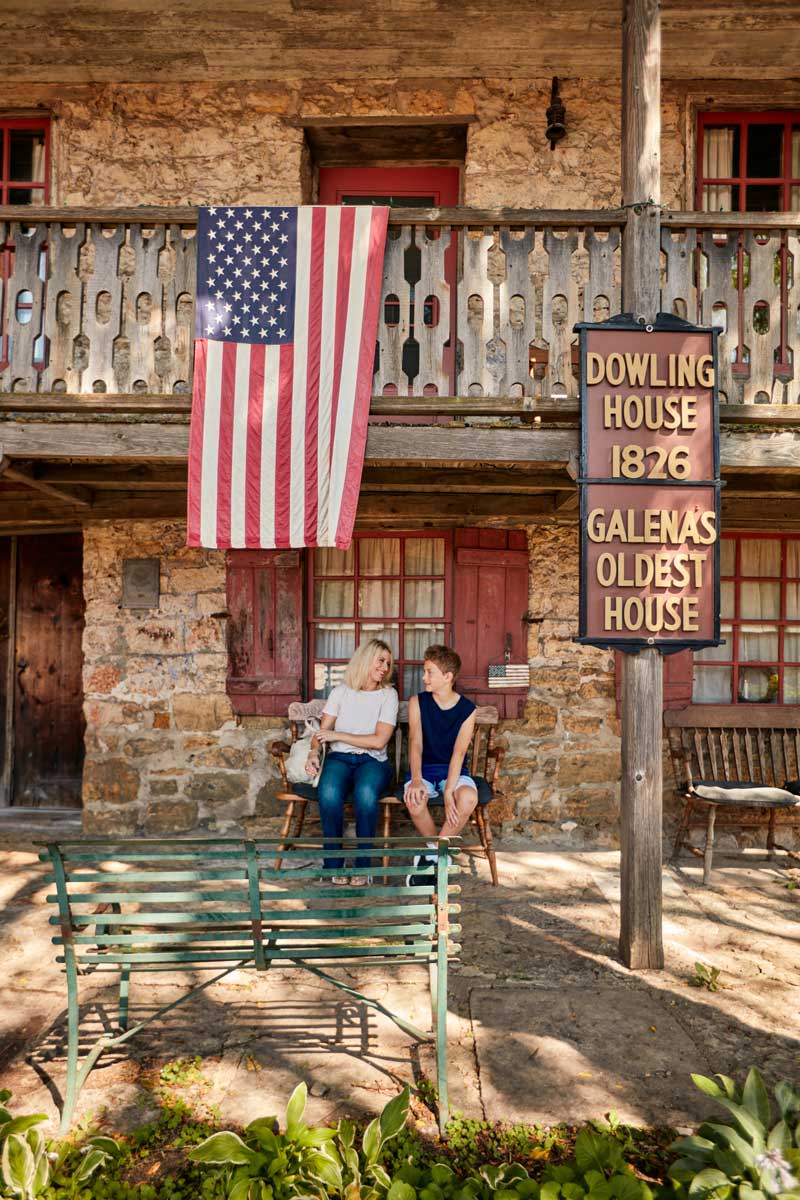
John Dowling House
(216 Diagonal Street)
This vernacular structure is one of Galena's oldest, constructed circa 1826-27. Dowling was a trader who quickly became the largest iron dealer on the Upper Mississippi. Here you could buy stoves, hinges, nails, picks, and shovels.
×
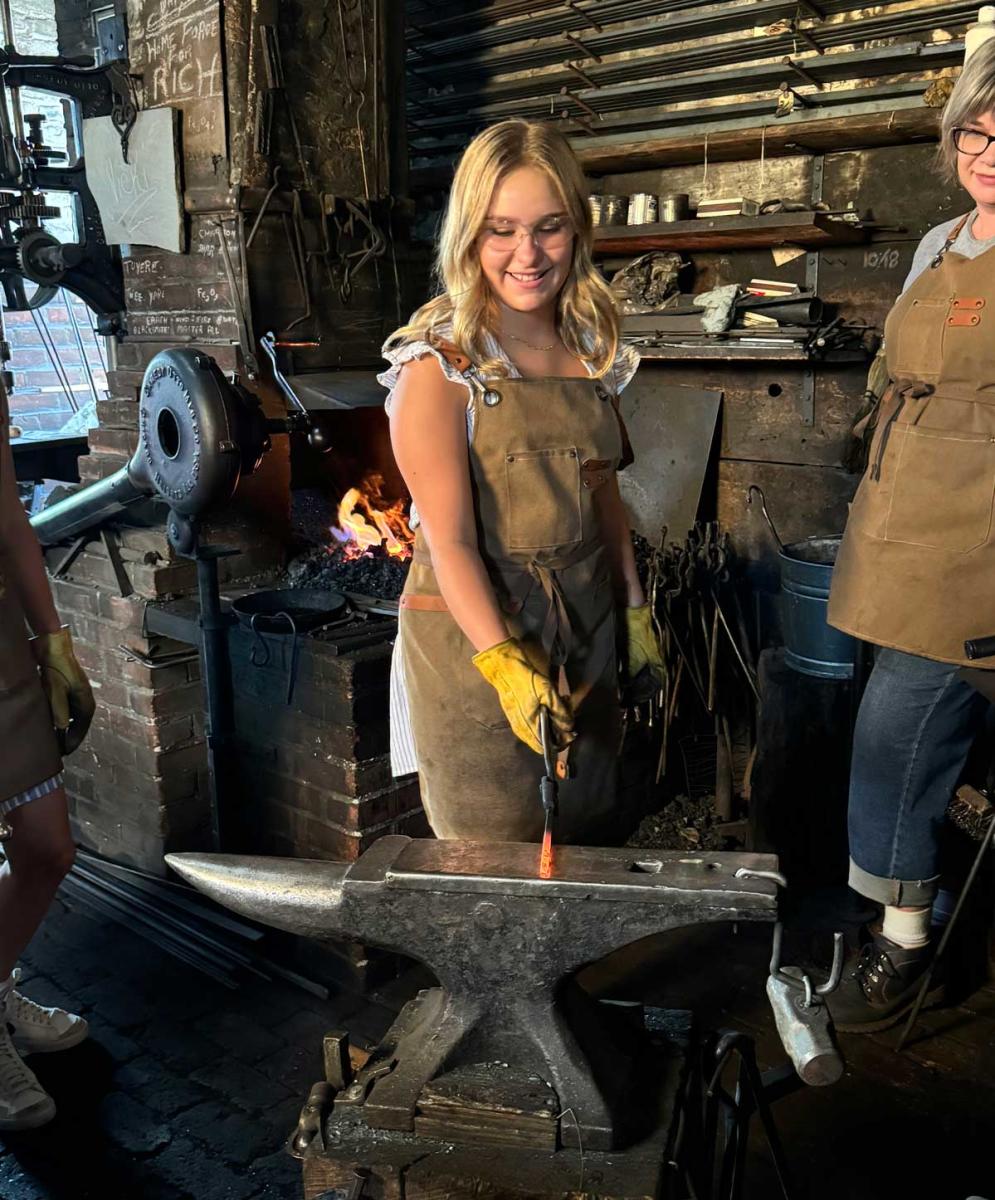
Old Blacksmith Shop
(Corner of Commerce and Franklin Streets)
Vernacular - At one time, Galena had more than two dozen operating blacksmith shops. Today the little red wood frame structure is the only one that remains. Built in 1897, most of the original tools including two forges and equipment are on display.
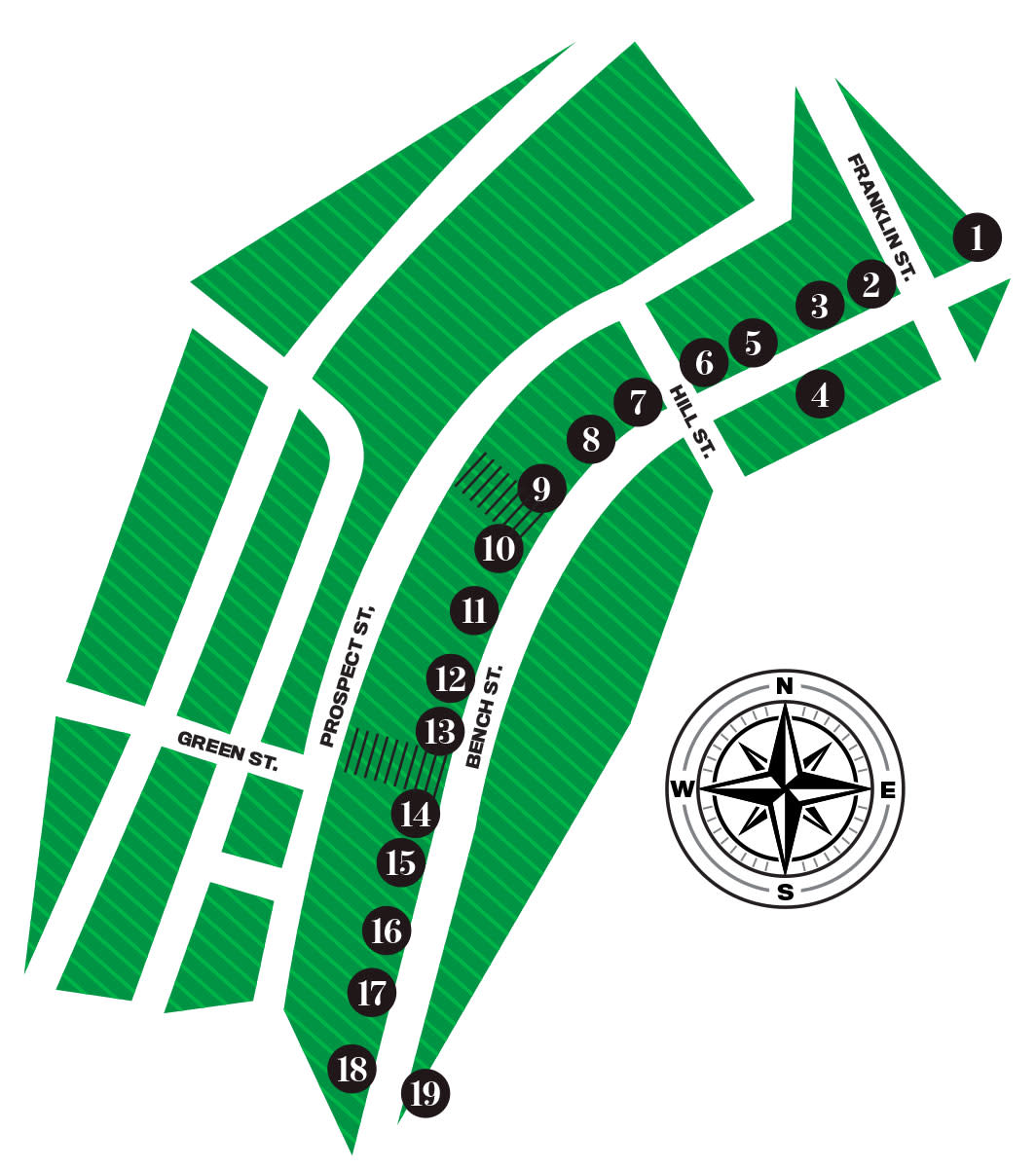
Bench Street
Cultural Affairs
- Jo Daviess County Courthouse (330 N. Bench Street)
- St. Rose Academy (228 N. Bench Street)
- Union Baptist Church (212 N. Bench Street)
- William Ryan House (201 N. Bench Street)
- James Strode House (120 N. Bench Street)
- First Presbyterian Church (106 N. Bench Street)
- Turner Hall (105 S. Bench Street)
- Henry Fricke House (119 S. Bench Street)
- First Methodist Church (125 S. Bench Street)
- Liberty Engine #1 Firehouse (Bench & Washington Streets)
- Daniel A. Barrows House (211 S. Bench Street)
- St. Michael Catholic Church (225 S. Bench Street)
- Dr. Horatio Newhall House (235 S. Bench Street)
- Old Banking House (403 S. Bench Street)
- Feehan Hall and St. Michael Annunciation School (413 S. Bench Street)
- Westminister Presbyterian Church (513 S. Bench Street)
- Galena Public Library (601 S. Bench Street)
- Frederick Stahl House (603 S. Bench Street)
- William Hempstead House (602 S. Bench Street)
×
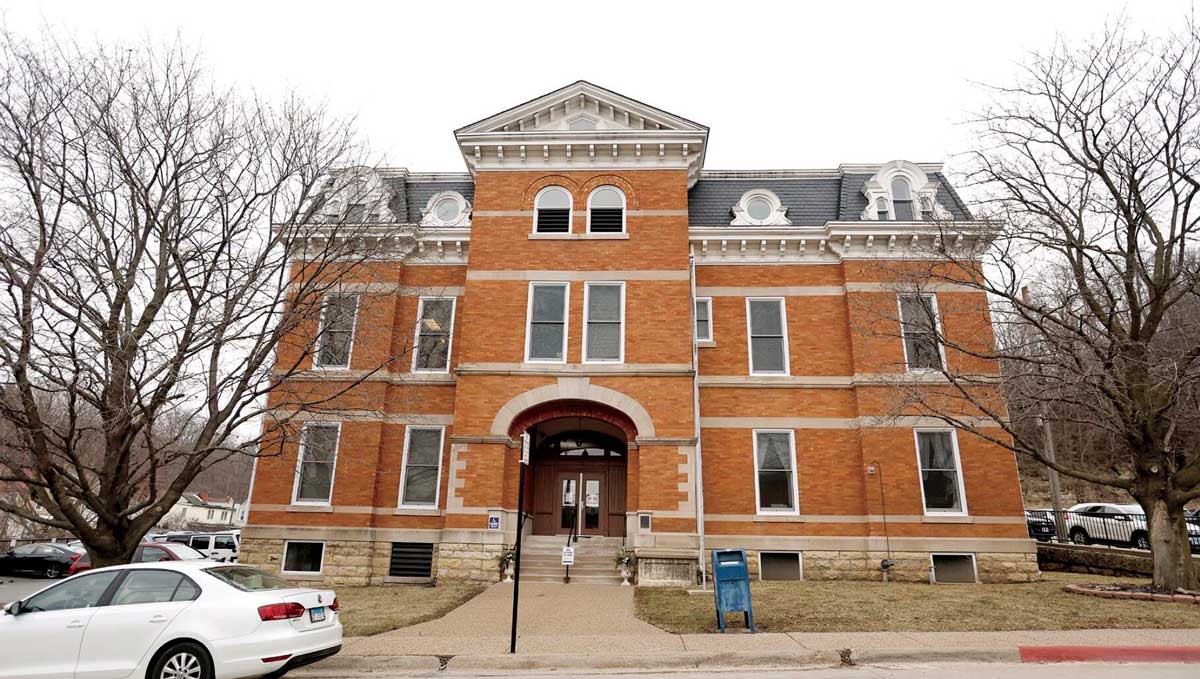
Jo Daviess County Courthouse
330 N. Bench Street
Second Empire and Greek Revival - Started in 1839, it took five years to complete amid shortages of materials, labor and finances. Cost overruns pushed final expenditures to nearly twice what was projected. The original structure had a beautiful Greek Revival portico with four large columns; removed in 1900 when the Second Empire front was added. The years 1970, 1976 and 2000 saw rear additions for public safety facilities. The population of Jo Daviess County when the courthouse was completed was about 15,000; today it's about 22,000. (The county peaked in the 1870s at 27,000.)
×
St. Rose Academy
228 N. Bench Street
Designed and built in 1859 by Father Samuel Mazzuchelli, a prominent Dominican missionary, priest and educator in the early lead mining region. The Academy, built in the Italianate style, was a school for Catholic girls. But from 1868 to 1875, it was used by the German Lutheran Church as part of Wartburg College.
×
Union Baptist Church
212 N. Bench Street
Built in 1854, the church failed to prosper. In the early 1900s a concrete block porch was added, hiding the original front of the building. Today it is the home to both the Odd Fellows and Masons.
×
William Ryan House
201 N. Bench Street
Greek Revival - A truly classic Greek Revival home, constructed in 1855 by a member of a large wholesale grocery firm. Note the elaborate Corinthian columns of temple front portico. This is a relatively late date for this style of home in a northern state.
×
James Strode House
120 N. Bench Street
Greek Revival - Built in 1846, this is a beautiful example of the Greek Revival architectural style, but of a type usually found in more southerly states. Strode, as it turns out, was from Kentucky and was representative of the strong social and economic ties early Galena had with southern states. It was Col. Strode who ordered a false alarm among the townspeople during the Black Hawk War of 1832, leading to panic and pandemonium. He had to leave town for several days for things to cool down.
×
First Presbyterian Church
106 N. Bench Street
Built in 1838 (with the front and spire added in 1855), this church could well be in New England. In fact, the steeple is said to have been copied from the Old South Church of Boston. The Galena church was established by Rev. Aratus Kent, who was educated at Yale and asked to be sent "to a place so hard that no one else will take it." They sent him to Galena.
×
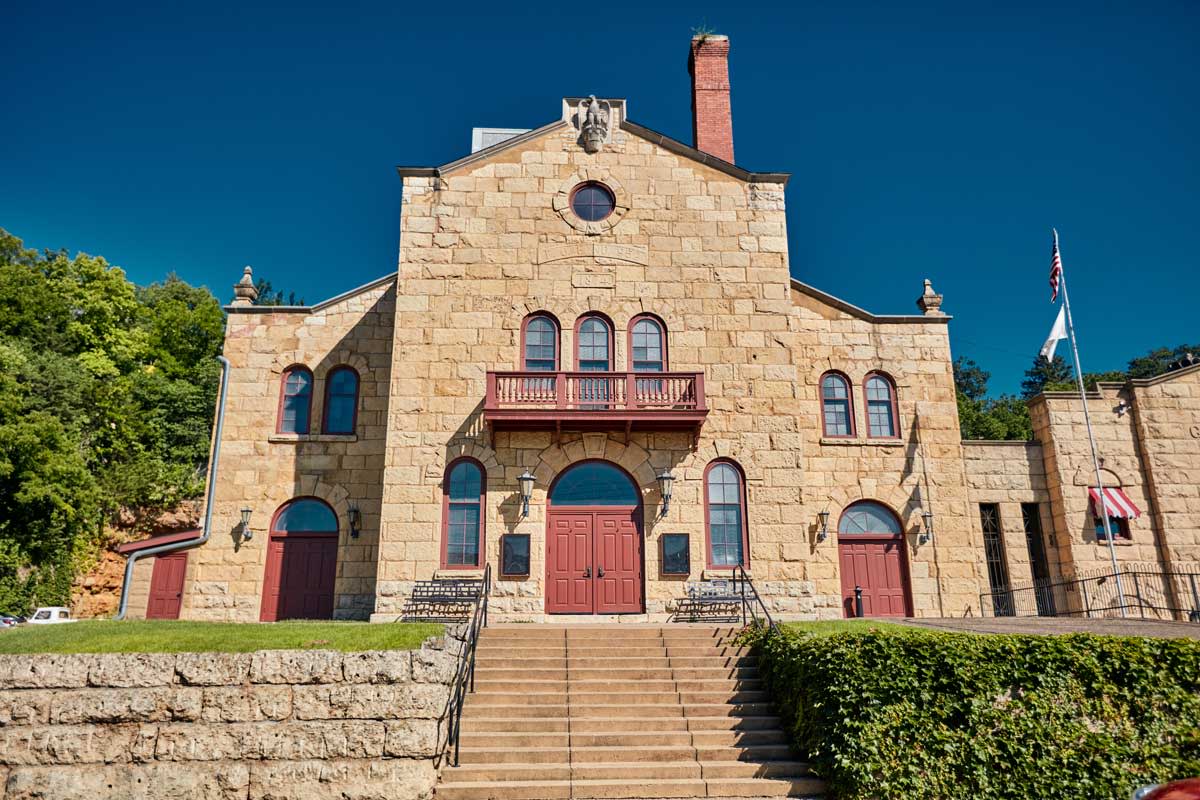
Turner Hall
105 S. Bench Street
Constructed in 1874 by the local Turner Society as a public hall for lectures, theater, rallies, etc. This fraternal society originated in Germany and was prevalent wherever large numbers of Germans settled. The Hall was gutted by fire in 1926 but rebuilt. William McKinley and Theodore Roosevelt spoke here from the stage. Later, numerous big bands performed here.
×
Henry Fricke House
119 S. Bench Street
Italianate - Built in 1878 by a retail merchant who dealt in watches, clocks and jewelry. Note porch detail and hoods (with keys) over the arched windows.
×
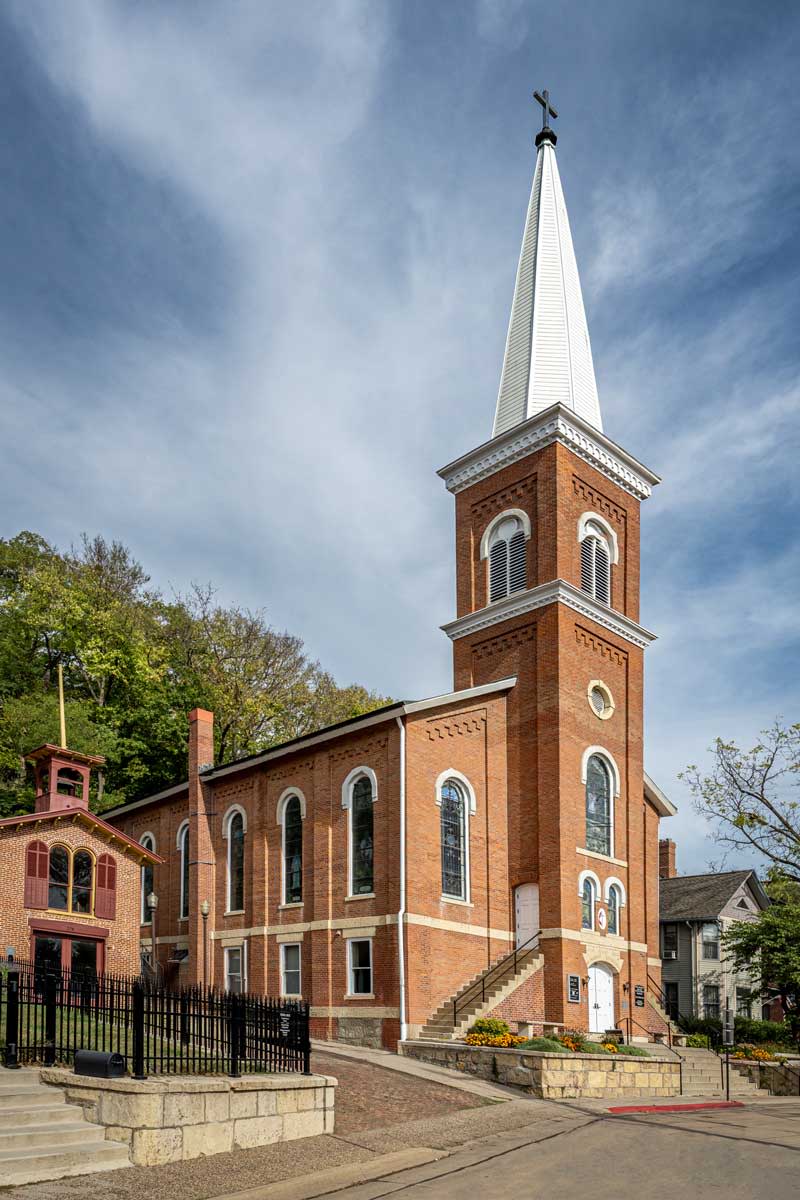
First Methodist Church
125 S. Bench Street
Designed in 1857 by architect Oliver Marble. Ulysses S. Grant and his family worshipped here upon their arrival in 1860; their pew is still identified. M.E. (Methodist Episcopal) churches became part of the United Methodists in the 20th century. The stairway (known locally as the "Firebell Steps") leads up the hill towards Grant's pre-war residence, now privately owned.
×
Liberty Engine #1 Firehouse
Bench & Washington Streets
Italianate - This 1851 Italianate structure is the oldest of its type in Illinois. It houses the city's original 1854 fire engine which was pulled by horses and pumped by hand, built by the Agnew Company of Philadelphia for $1600.
×
Daniel A. Barrows House
211 S. Bench Street
Italianate - Home to the Galena Historical Society Museum since 1938, this ornate Italianate was built in 1858 by a prominent businessman who owned a confectionary store, distillery and lumberyard. The architect was William Dennison, who also designed the U.S. Grant Home on Bouthillier Street. A strong Republican and supporter of Lincoln and Grant, Barrows had a window smashed by rocks during a Democratic rally and march down Bench Street in 1864. In 1922, the Odd Fellows purchased the building and added the rear addition as lodge space and community hall. The City of Galena purchased it in 1938; the front two rooms served as City Hall until 1967. The hillside rock terraces were gardens during the 19th century.
×
St. Michael Catholic Church
225 S. Bench Street
Built in 1856 after the previous church had burned to the ground in Galena's worst fire. Designed by Father Samuel Mazzuchelli and completed in 1863. Parish established in 1832 by Father Mazzuchelli and made up largely of Irish working class families.
×
Dr. Horatio Newhall House
235 S. Bench Street
Italianate - Circa 1848 home of Galena's foremost physician. Designed in an Italianate style, note the cupola on a gently sloping roof, along with brackets under broad eaves. The porch and posts are very early for this type of design. Its use as a funeral home goes back 80 years.
×
Old Banking House
403 S. Bench Street
Vernacular - Oldest section is of log built in the 1820s, now hidden by clapboards. Served as home to the Galena branch of the Illinois State Bank in the 1830s. Remodeled several times in its long history.
×
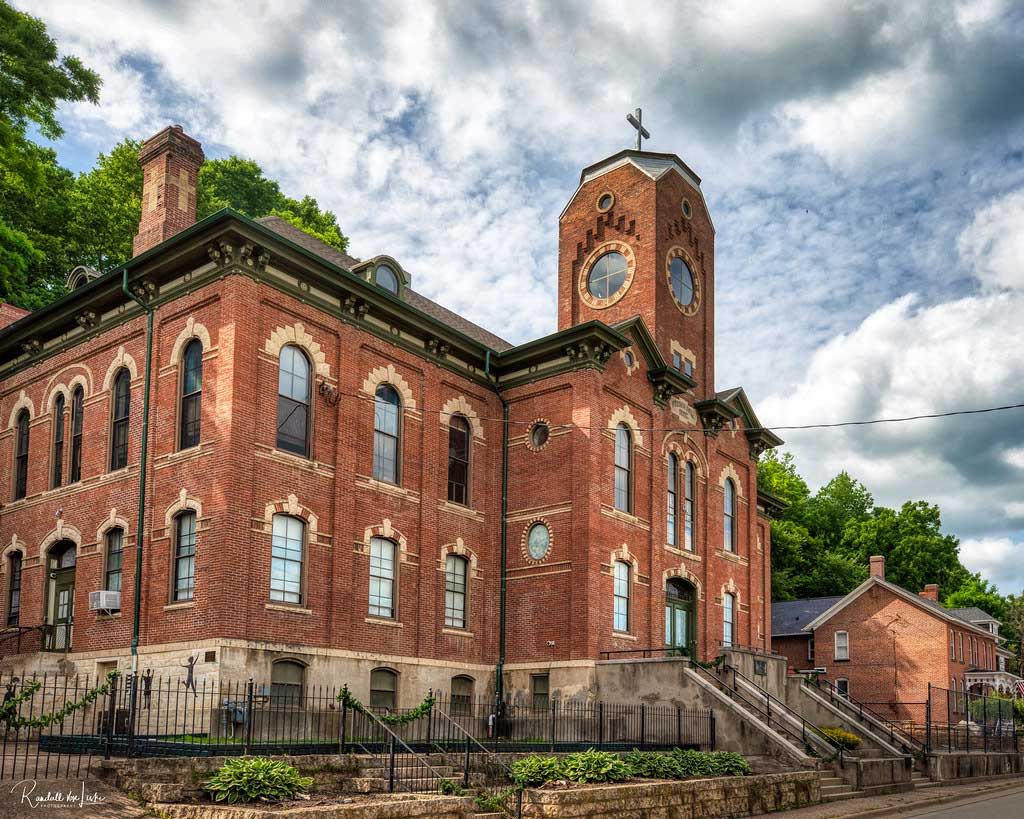
Feehan Hall and St. Michael Annunciation School
413 S. Bench Street
Built in 1886 by St. Michael parish as their school. The school served thousands of students until it closed in the 1960s. Currently the building is home to the Galena Art and Recreation Center, a private, non-profit organization.
×
Westminster Presbyterian Church
513 S. Bench Street
Dedicated for worship in 1848, this church was organized after a split among the congregation of the First Presbyterian Church at 106 N. Bench. Steeple replaced in 2002 with one made of steel and aluminum.
×
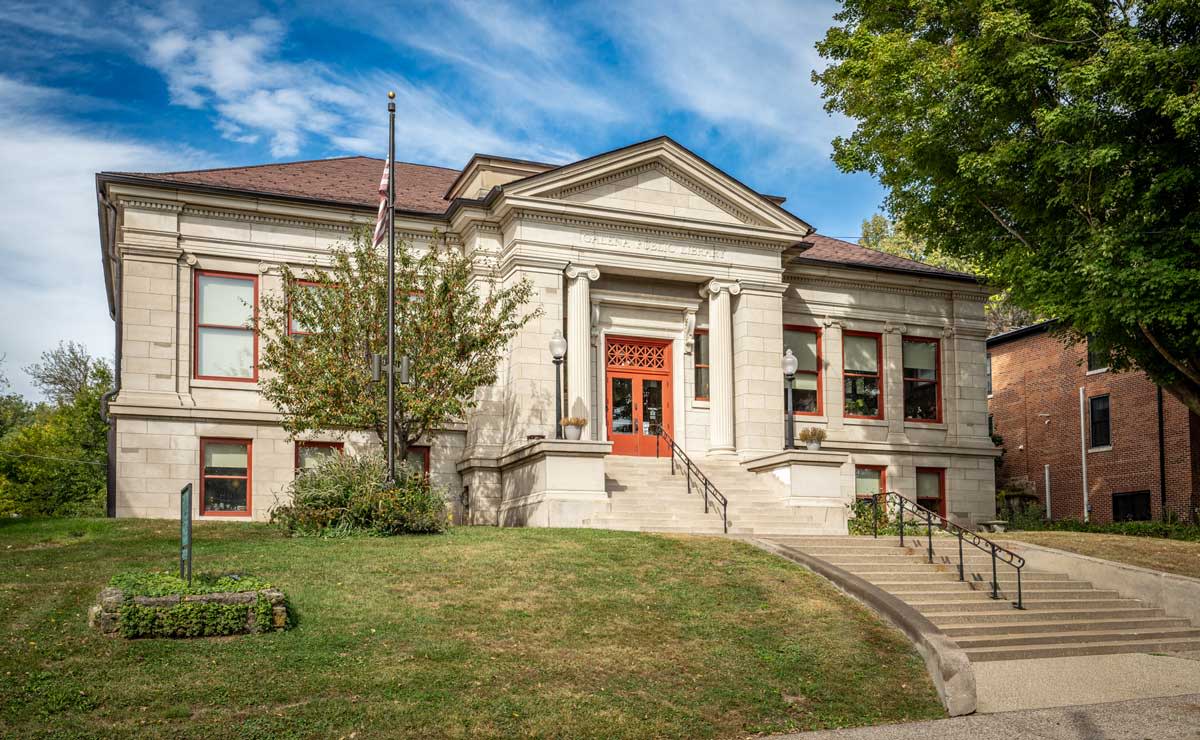
Galena Public Library
601 S. Bench Street
Neoclassical - Built with funds from Andrew Carnegie and the estate of local banker B.F Felt in 1907, the library was first established in 1894. Felt had stipulated that four of the nine trustees be female. His accomplished daughter, Anna, was one of those four and served until her death in 1953. The first Rules Committee determined that no anarchistic, atheistic or immoral books were to be tolerated.
×
Frederick Stahl House
603 S. Bench Street
Greek Revival - Circa 1842 home with earlier Federal style fan light over front door (as opposed to a transom consisting of a horizontal row of small glass panes). Note Greek Revival attic windows with cast iron fret coverings. Stahl was prominent in banking and insurance.
×
William Hempstead House
602 S. Bench Street – Opposite side of street from 603 S. Bench Street
Greek Revival - Row house constructed about 1843. This and the others next to it all show Greek Revival influences. Note simple dormers with triangular pediments over windows. Also note doorways with sidelights and horizontal transoms.
Prospect Street
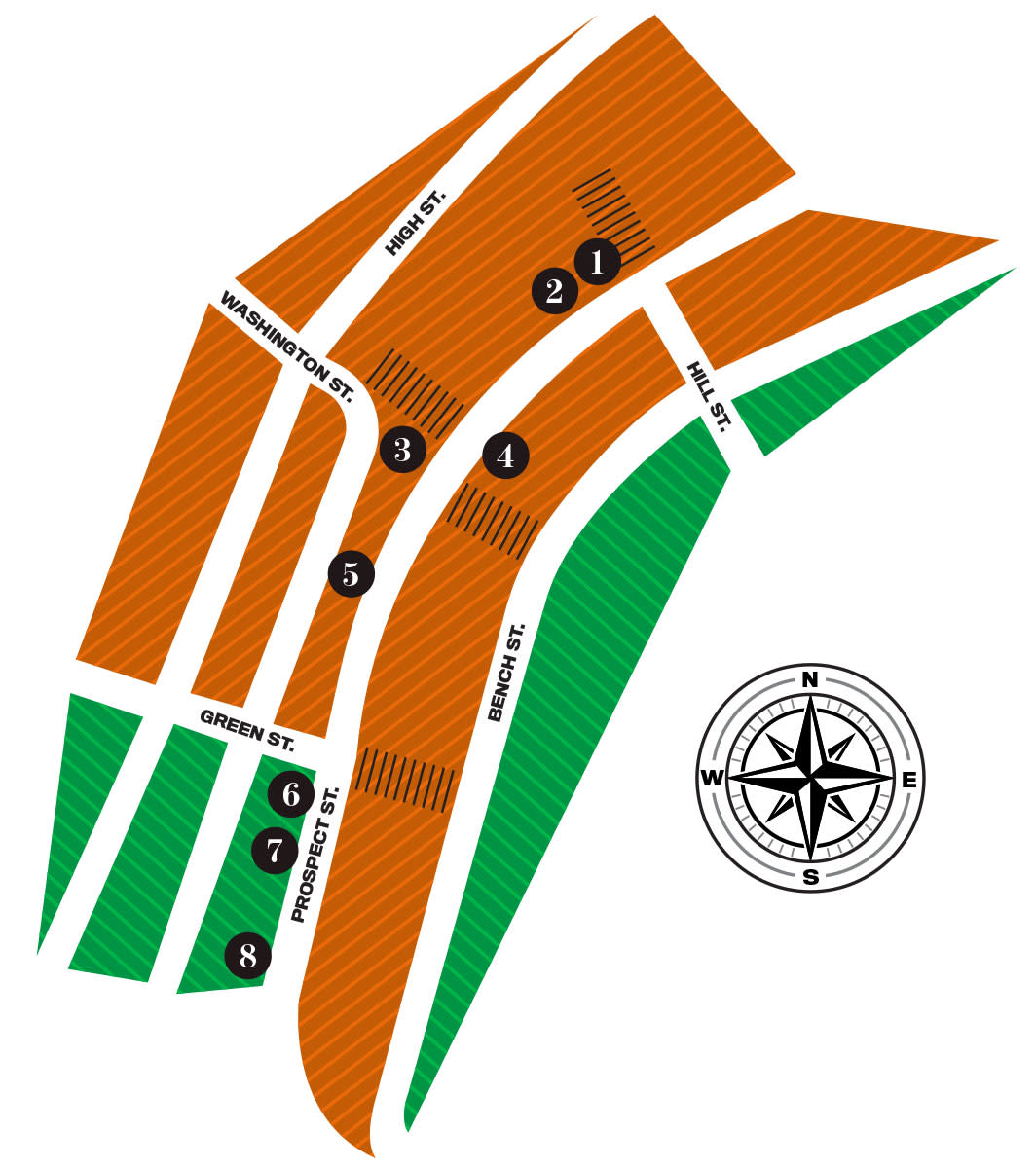
Elevated Mansions
- Grace Episcopal Church (Hill & Prospect Streets)
- Felt House (125 S. Prospect Street)
- Asa Haile House (209-211 S. Prospect Street)
- Old Methodist Parsonage (206 S. Prospect Street)
- John Fiddick House (215 S. Prospect Street)
- Loveland House (301 S. Prospect Street)
- Old Galena High School (411 S. Prospect Street)
- Husted House (413 S. Prospect Street)
×
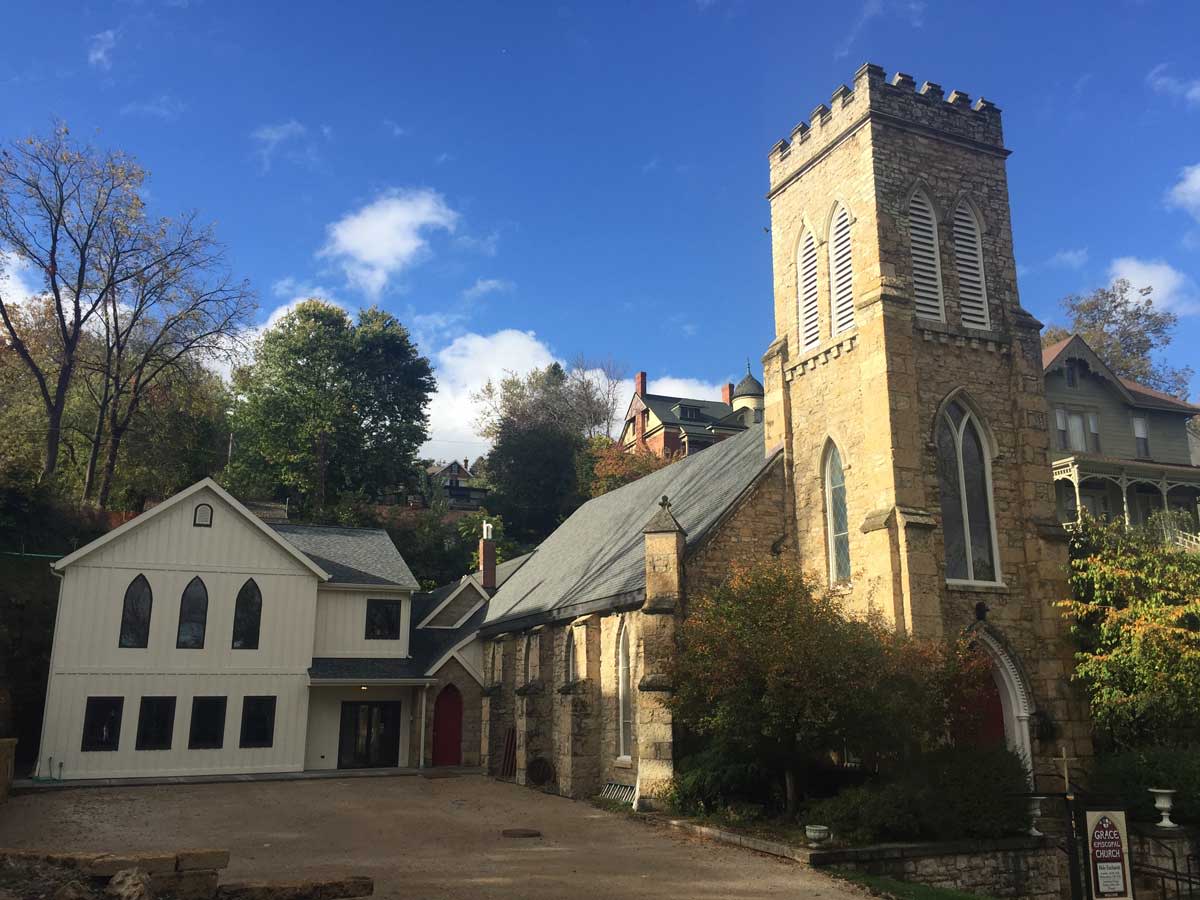
Grace Episcopal Church
Hill & Prospect Streets
This enchanting stone edifice was constructed in 1848, partly from stone quarried at the site. It is Gothic Revival in style with its steeply pitched roofs, arched openings and characteristic window hoods. The steeple was removed in 1904. The original 1837 Henry Erben organ has been restored, the oldest organ still in use in Illinois. Money for its purchase was donated by Mrs. Alexander Hamilton, who was visiting her son in the lead mines at the time.
×
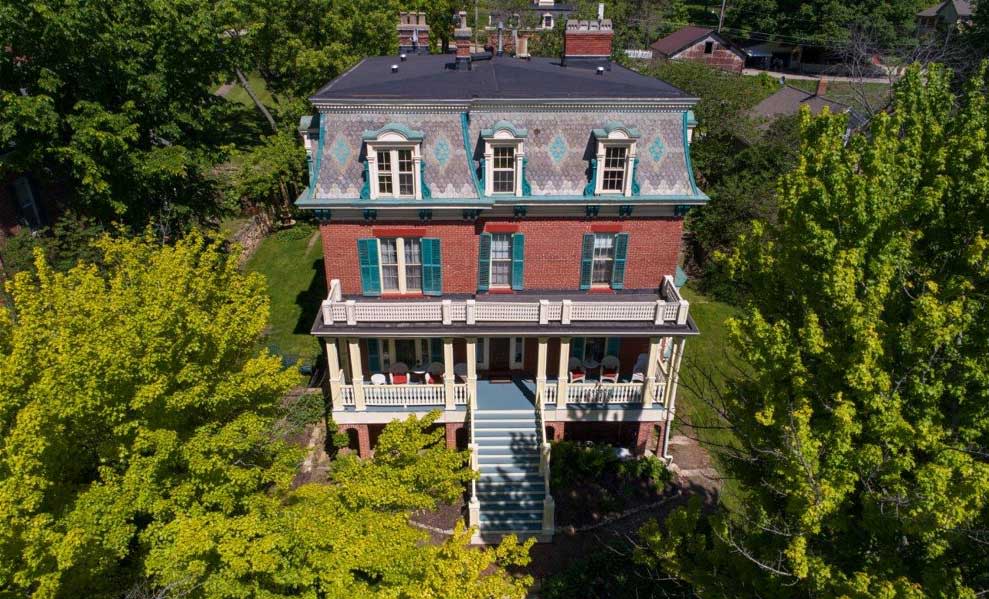
Felt House
125 S. Prospect Street
Second Empire - Dry goods merchant Lucius Felt built a house here circa 1850, but what you see now is a major remodeling clone in 1874. The "new" house was done in the Second Empire style and sports a large dance hall under the mansard roof. The double stone stairway cost thousands of dollars and was for many years known as "Felt's Folly."
×
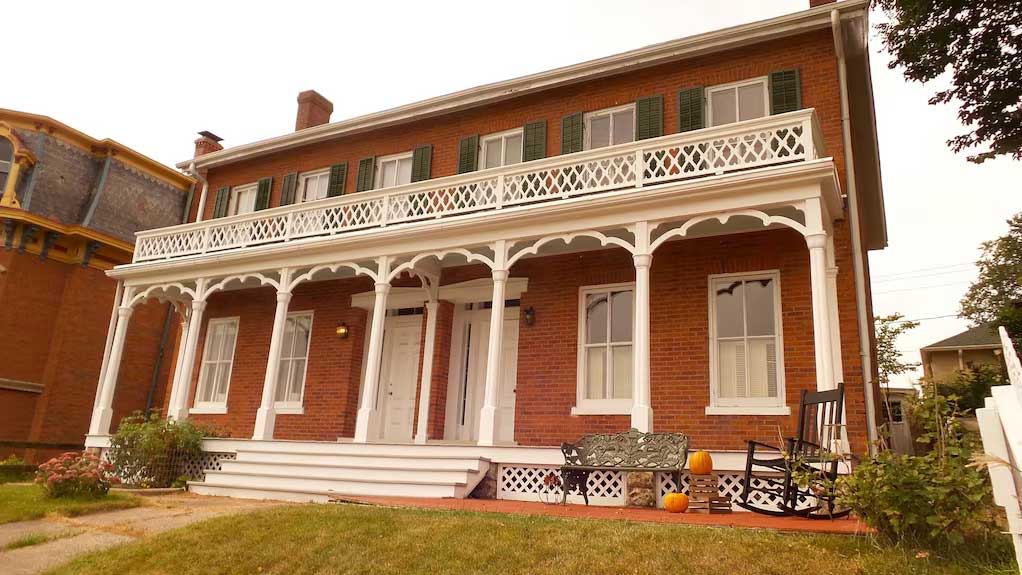
Asa Haile House
209-211 S. Prospect Street
Greek Revival - This 1856 brick home was built by Asa Haile, prominent bricklayer and building contractor. It was Haile who laid the brick for the five floors of the DeSoto House Hotel in 1854 and it was Haile who removed the top two floors of the hotel in 1880.
×
Old Methodist Parsonage
206 S. Prospect Street
Vernacular - Known more recently as the Osprey's Nest, a clue to its precarious position on the hillside, this 1850s home served the original Methodist Church directly below on Bench Street (this church is now gone). A steep wooden stairway connected the two.
×
John Fiddick House
215 S. Prospect Street
Second Empire - Dry goods merchant John Fiddick built the original house in 1859, but a major remodeling in 1873 produced this imposing Second Empire style. It was not uncommon for earlier house styles to be "updated" during later periods.
×
Loveland House
301 S. Prospect Street
Italianate - Daniel Loveland built this Italianate Mansion in 1870. A large cupola originally adorned the Green Street side, similar to that on the Belvedere Mansion on Park Avenue. It was removed due to deteriorated condition.
×
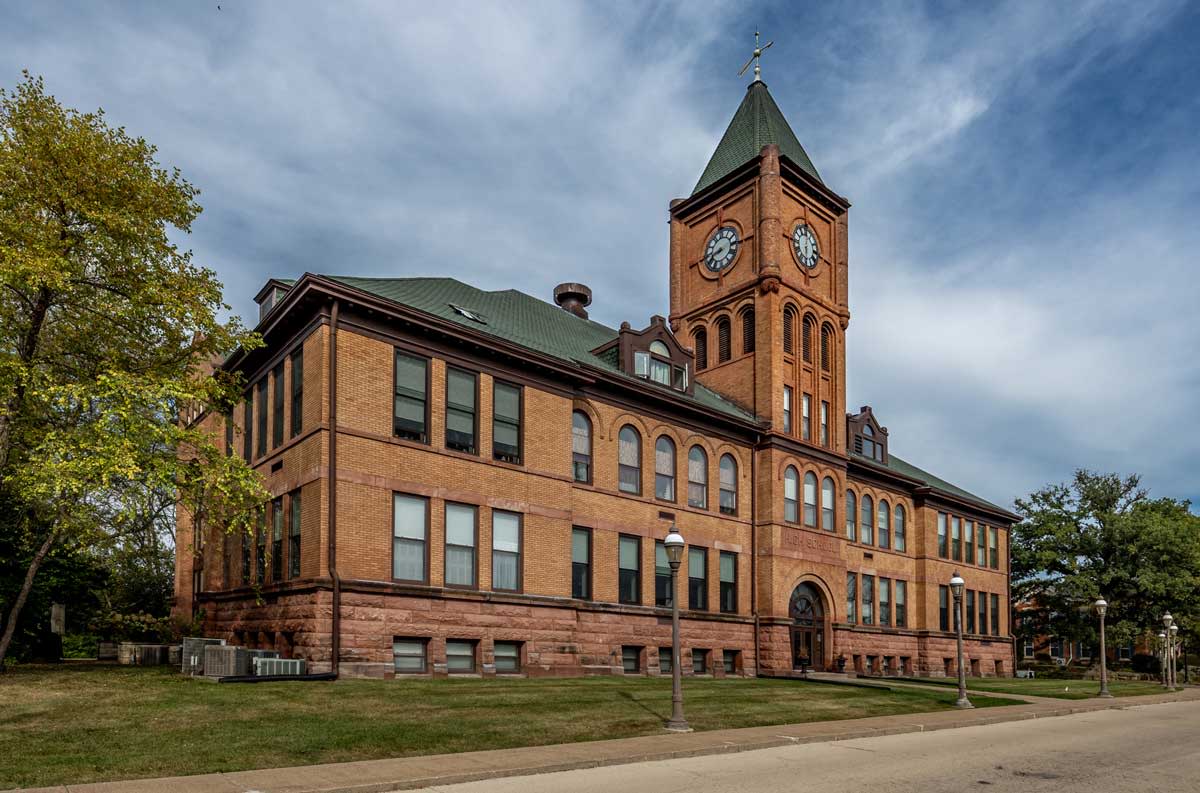
Old Galena High School
411 S. Prospect Street
Richardsonian Romanesque - This massive structure dominates Galena's skyline. Note the deep and arched openings and bands of windows. Built in 1905 after the previous school burned, the new building featured a square tower with "four circular openings ... each nearly seven feet in diameter." Discontinued in 1980, the school was sold and converted to condominiums.
×
Husted House
413 S. Prospect Street
Italianate - Grocery and general store proprietor Lyman Husted built this house in 1856. The porch has been altered and the ornate front picket fence is gone, but the home is otherwise original.
Spring Street
Artisans and Breweries
×
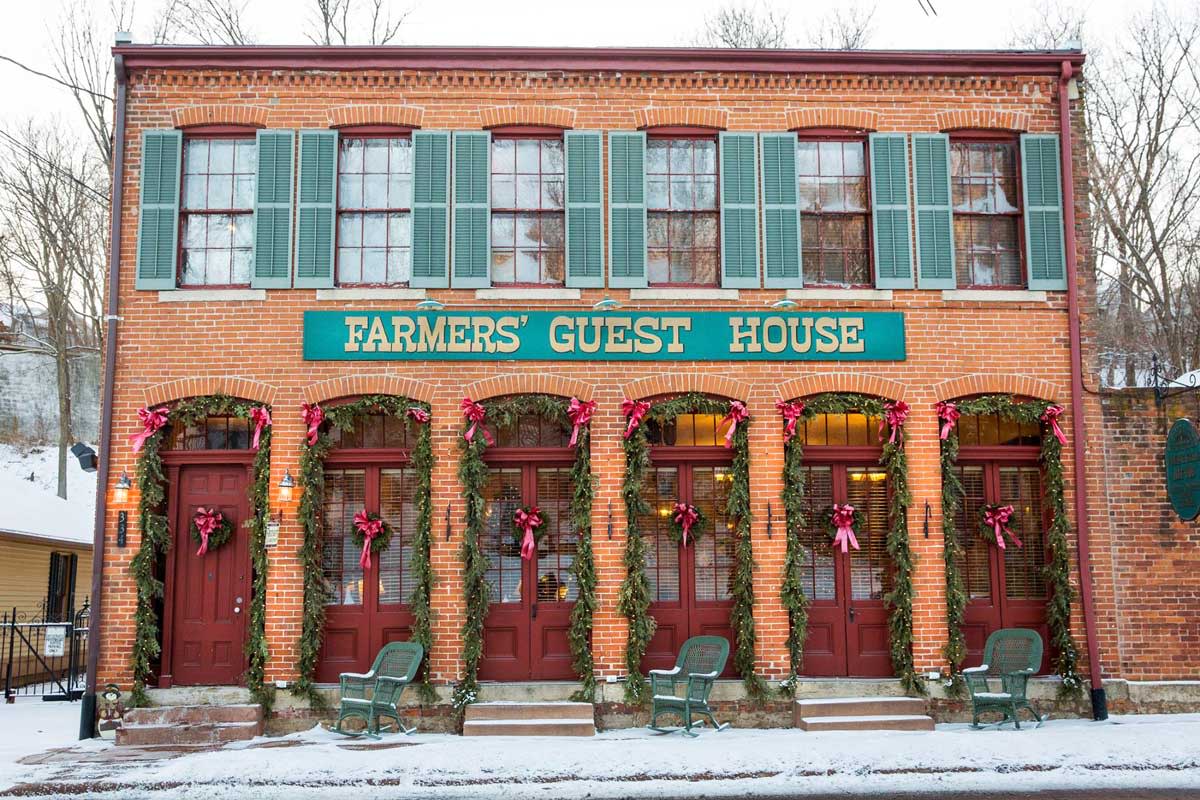
Vogel’s Bakery
334 Spring Street
German bakers established a bakery here in 1867. Rooms were also made available. Their largest clientele became farmers overnighting in town prior to their return home after trading.
×
Morrison House
347 Spring Street
This circa 1830 home shows the French vernacular influence in very early Galena. Note how the porch is an integral part of the structure. The French were also noted for post and sill construction, where the walls were made from squared vertical timbers resting on a sill.
×
City Brewery Icehouse
414 Spring Street
This massive stone structure with Italianate features was a part of the City Brewery complex at 418 Spring Street. Constructed in 1876 with 27-inch thick walls, beer was brewed on the first floor while ice harvested from the Galena River was stored on the second, the latter floor designed to hold 800 tons of ice at one time.
×
City Brewery Secondary Ferment Building
418 Spring Street
Built about 1850, this became part of Rudolph Spier's City Brewery in 1855. The brewmaster lived upstairs. Beer was stored below, where it went through a secondary fermentation. An 1874 article reported nine underground cellars. By 1889, it was a home for college studentss but today it is an artist's home and studio.